We helped 75+ brands generate $1.56M+ in revenue. Average ROI: 240% in Year 1
Let's cut straight to it.
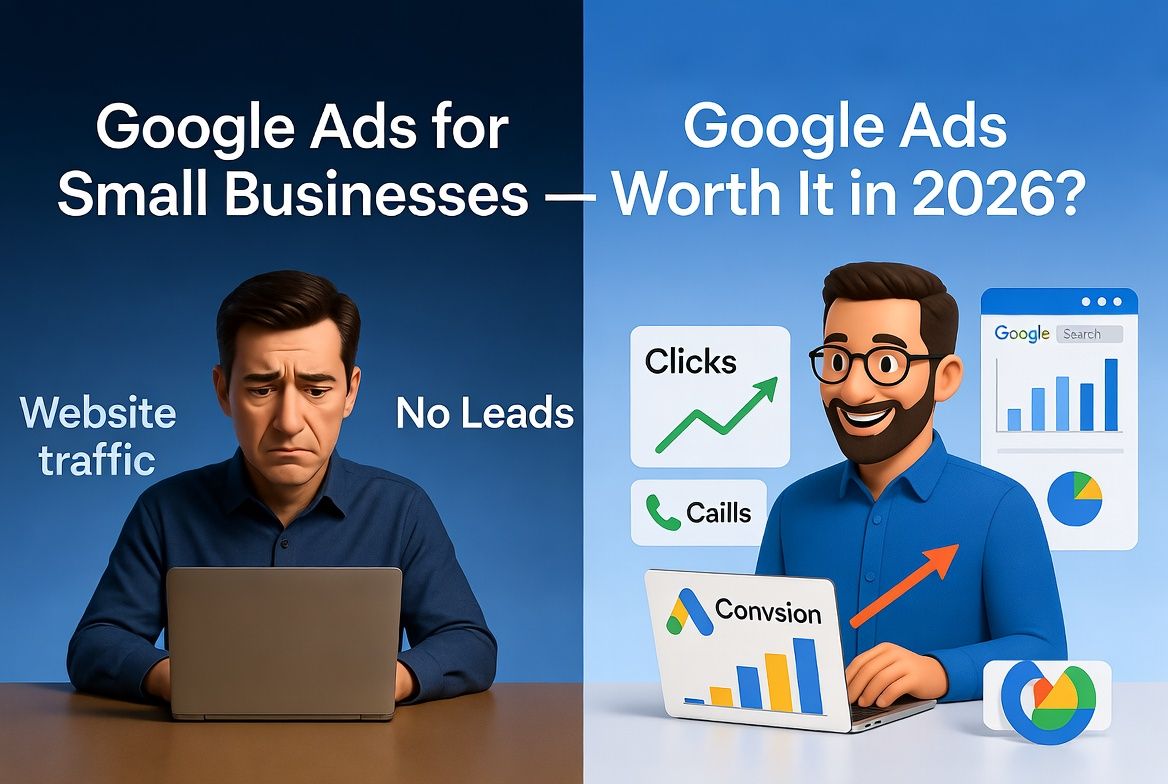
Some small business owners swear by Google Ads. They run campaigns every month, track every dollar, and generate more leads than they can handle. Others tried it once, burned through $500 in two weeks, got nothing back, and concluded that Google Ads is a scam designed to drain small business budgets.
Same platform. Same Google. Wildly different results.
So is Google Ads actually worth it for a small business in 2026 — or is it just a way to hand money over to Google and hope for the best?
The honest answer is: it depends. And by the end of this guide, you'll know exactly what it depends on — and whether Google Ads is the right move for your specific business right now.
At AheadTech360, we manage Google Ads campaigns for small businesses across the US every single month. The businesses that get great results are not the ones spending the most — they're the ones who understand what they're getting into before they launch. That's what this guide gives you.
Google Ads is a pay-per-click advertising platform. You bid on keywords — words and phrases that people type into Google — and your ad appears at the top of search results when someone searches for those terms. You pay only when someone clicks your ad.
The core idea is deceptively simple: your ideal customer is already searching for what you sell. Google Ads puts your business in front of that person at the exact moment they're looking. No cold outreach. No interrupting someone who wasn't looking. Pure intent-based advertising.
For a plumber, that means showing up when someone types 'emergency plumber near me' at 11pm. For a dentist, it's appearing when someone searches 'teeth cleaning Dallas no insurance.' For a roofing company, it's being the first result when a homeowner searches 'roof repair after storm.'
The key thing that separates Google Ads from social media advertising is intent. On Facebook or Instagram, you're reaching people who weren't looking for you. On Google, you're reaching people who are already looking — and your job is simply to show up and make a compelling offer. That's why Google Ads tends to generate faster leads for service businesses.
Here's what most agencies won't tell you upfront: Google Ads is not a magic switch. You don't turn it on and watch money fall out. There's a learning curve, a testing phase, and a real minimum investment required before most campaigns become profitable.
That said — for businesses in the right situation, Google Ads delivers some of the fastest and most measurable returns of any marketing channel available. The key phrase is 'for businesses in the right situation.
Here are the real numbers that set honest expectations:
The businesses that hit those numbers aren't special. They're not spending $10,000 a month. They've done three things right: they targeted the right keywords, sent traffic to a page built to convert, and tracked results precisely enough to keep optimizing.
The single most useful thing you can take away from this guide is this table. It will tell you immediately whether your business is in the category where Google Ads tends to work — or the category where it tends to waste money.
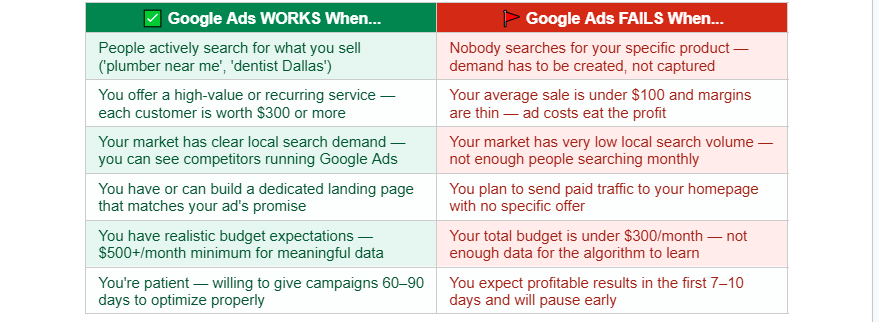
If your business matches the left column — especially the first two rows — Google Ads has a very high probability of working for you with the right strategy. If you match multiple items in the right column, the platform may not be the right fit right now.
Not all businesses benefit equally from Google Ads. The platform works best when there is clear, existing search demand — people who are already typing queries related to your service into Google.
These industries consistently generate strong returns from well-managed Google Ads campaigns:
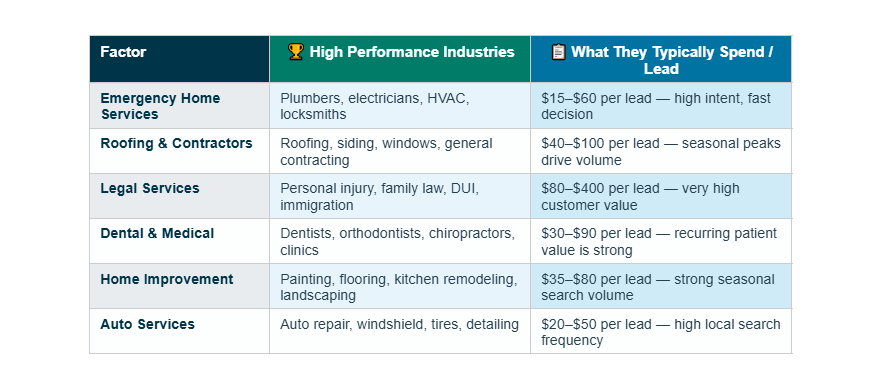
Businesses in these categories have a real structural advantage on Google Ads: people search for them when they have an immediate need. That intent is worth a premium — and for the business owner who shows up at the top, it converts into real revenue.
Here's something that surprises most small business owners: a well-run local Google Ads campaign can outperform a large national brand with ten times the budget. And the reason comes down to something called Quality Score.
Google doesn't just sell ad space to the highest bidder. It rewards relevance. When your ad closely matches what someone is searching for, and your landing page delivers exactly what the ad promised, Google gives you a higher Quality Score — and charges you less per click than a big brand with irrelevant, generic ads.
A national HVAC company running a generic 'HVAC services nationwide' campaign will score poorly for someone searching 'AC repair Austin TX.' A local Austin HVAC company with a tightly targeted campaign and a landing page that says 'Same-Day AC Repair in Austin — Free Estimate' will score higher, pay less per click, and outrank the national brand — even with a fraction of the budget. Relevance beats budget. Always.
This is the reason well-managed small business campaigns consistently outperform DIY big-brand campaigns. Tight targeting, relevant ad copy, and a matched landing page are worth more than an unlimited budget spent on broad, generic keywords.
Most failed Google Ads campaigns fail because of problems that existed before the campaign launched — not because Google Ads 'doesn't work.' Here's what needs to be in place before you spend a dollar:
A specific, clear offer — not 'we offer plumbing services.' Something like '$89 drain cleaning, same-day service, licensed plumber.' Specificity drives clicks and calls.
A landing page that converts — not your homepage. A dedicated page that matches exactly what your ad promises. One headline, one call to action, no distractions. This is where most small business campaigns fail silently.
Conversion tracking set up correctly — you need to know which keywords generate calls and form fills — not just clicks. Without tracking, you're spending money with no feedback loop. Google Tag Manager + conversion actions take a few hours to set up correctly.
A realistic budget for your market — most local service businesses need $500–$1,000/month in ad spend to gather enough data to optimize. Below $300/month, you're not giving the algorithm enough volume to learn.
Patience for the testing phase — Google's algorithm needs 4–6 weeks of data to optimize targeting, bidding, and audience patterns. Campaigns paused at day 10 never reach the profitable phase.
🚩 The most expensive Google Ads mistake isn't running bad ads — it's setting up tracking incorrectly and spending months optimizing for the wrong signals. Before you launch, verify that every call and form submission is being tracked back to the specific keyword and ad that generated it. Without this, optimization is guesswork.
Let's put real numbers on what Google Ads can realistically return for a small service business — not the best-case scenario, but the realistic numbers from properly managed campaigns:
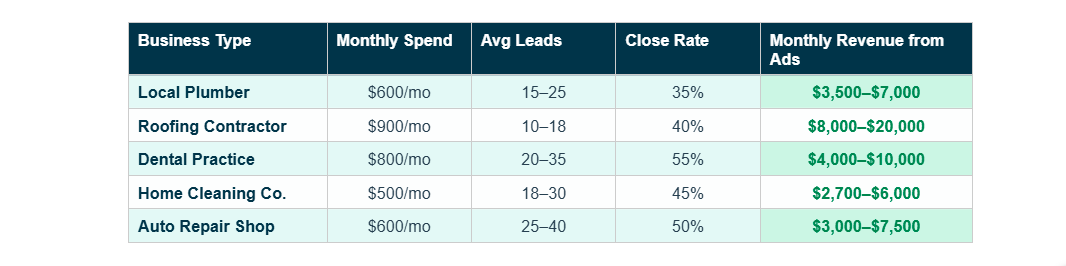
These numbers are from optimized campaigns — typically months 2–4 after launch, not week one. Month one is always the data collection phase. The businesses that achieve these returns committed to the process and didn't quit before the algorithm had time to learn.
At AheadTech360, we've seen a local plumbing company go from $0 online to 20+ qualified leads per month within 90 days of launching a properly structured Google Ads campaign. We've seen a dental practice fill its appointment calendar for new patient cleanings within 6 weeks. These results aren't exceptional — they're what happens when the fundamentals are executed correctly.
Here is the straightforward answer:
Google Ads is worth it when your customers actively search for what you offer, you have a realistic budget to gather real data, you can send that traffic somewhere that converts, and you track results precisely enough to keep improving. Under those conditions — which apply to the vast majority of local service businesses — Google Ads is one of the fastest and most measurable lead generation tools available.
Google Ads is not worth it when your product requires demand creation rather than demand capture, your budget is too small to gather meaningful data, your website or landing page isn't ready to convert traffic, or you're expecting results within the first few days without patience for the testing phase.
The platform doesn't fail. Strategies without proper foundations fail. And every foundation issue — targeting, landing page, tracking, budget — is fixable once you know where to look.
Google Ads is one of the most powerful lead generation tools available to small businesses in 2026 — when it's done right. For local service businesses in particular, where customers actively search before they buy, the platform puts your business in front of buyers at the exact moment they're ready to make a decision.
But done right is the critical part. You need the right keywords, a landing page built to convert, verified conversion tracking, and enough patience and budget to let the algorithm learn. When all of those pieces are in place, Google Ads is not an expense — it's an investment with a measurable, repeatable return.
The businesses that fail with Google Ads share one thing in common: they expected the platform to do the work. The businesses that win understand that the platform is just distribution. The strategy, the offer, and the execution are everything.
Google Ads doesn't work for everyone. But for the right business, set up the right way, it works consistently.