We helped 75+ brands generate $1.56M+ in revenue. Average ROI: 240% in Year 1
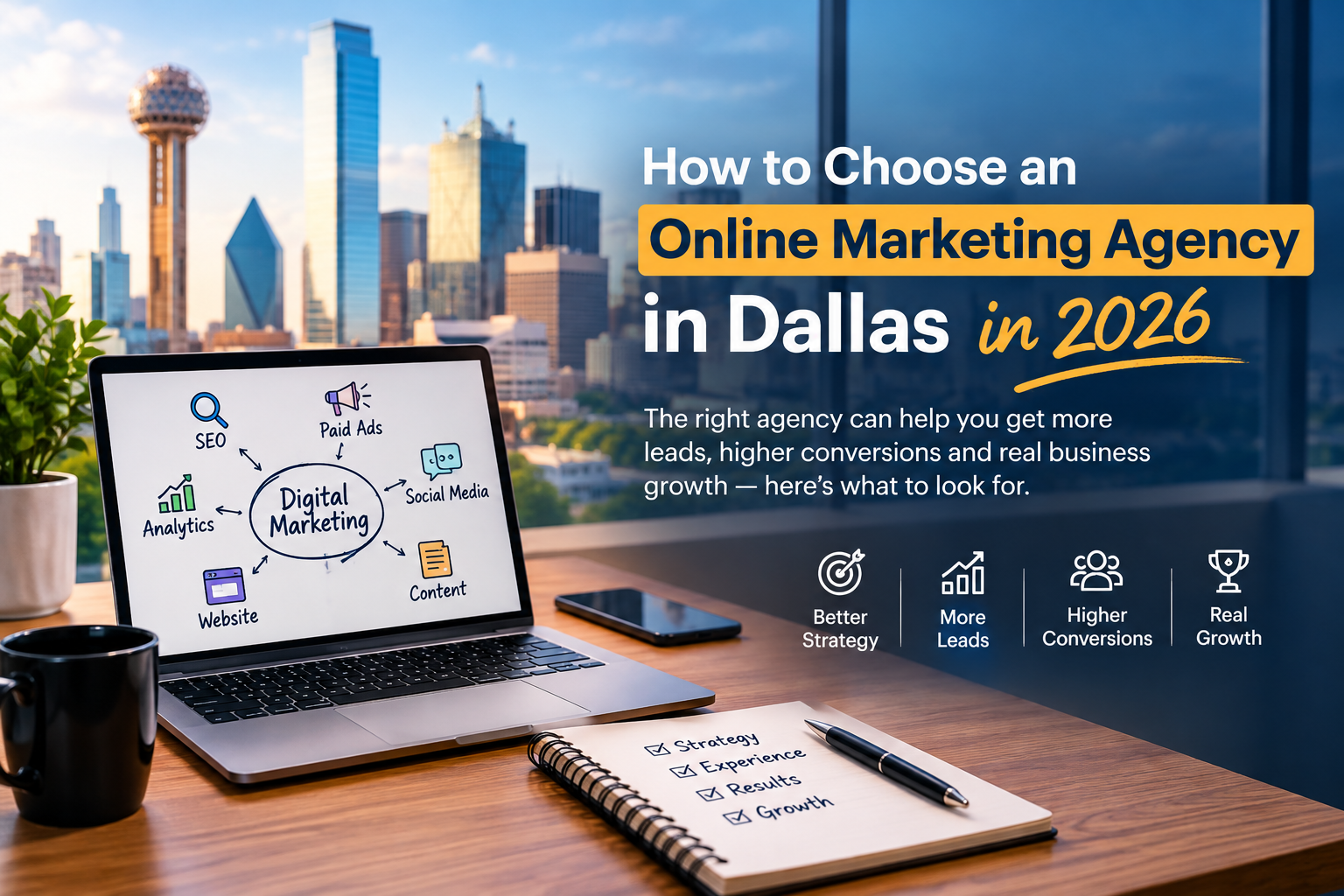
Choosing an online marketing agency in Dallas should not come down to who promises the most traffic, the biggest keyword list, or the lowest monthly price. A good agency should be able to explain what it will do, why it will do it, how the work connects to your business goals, and how results will be measured.
For a Dallas business, the right evaluation starts with your actual growth problem: Do you need more qualified local traffic, better conversion rates, stronger paid campaigns, better content, more leads, or a complete digital marketing system?
This 2026 checklist breaks down what to look for before hiring an agency.
A strong online marketing agency does more than generate traffic. It connects strategy → execution → measurement → optimization → business results.
Before hiring an agency, check whether it can:
Understand your business and target customers.
Build a strategy around your actual goals.
Show relevant work or case studies.
Explain exactly what will be delivered.
Connect SEO, paid advertising, content, social media, website and CRO where needed.
Track meaningful conversions.
Explain results in business terms.
Continuously test and improve the strategy.
If an agency cannot explain how its work will help your business generate qualified leads or revenue, ask for more detail before signing a contract.
1. Start With Your Actual Marketing Problem
Before searching for an online marketing agency in Dallas, define the problem you are trying to solve.
For example:
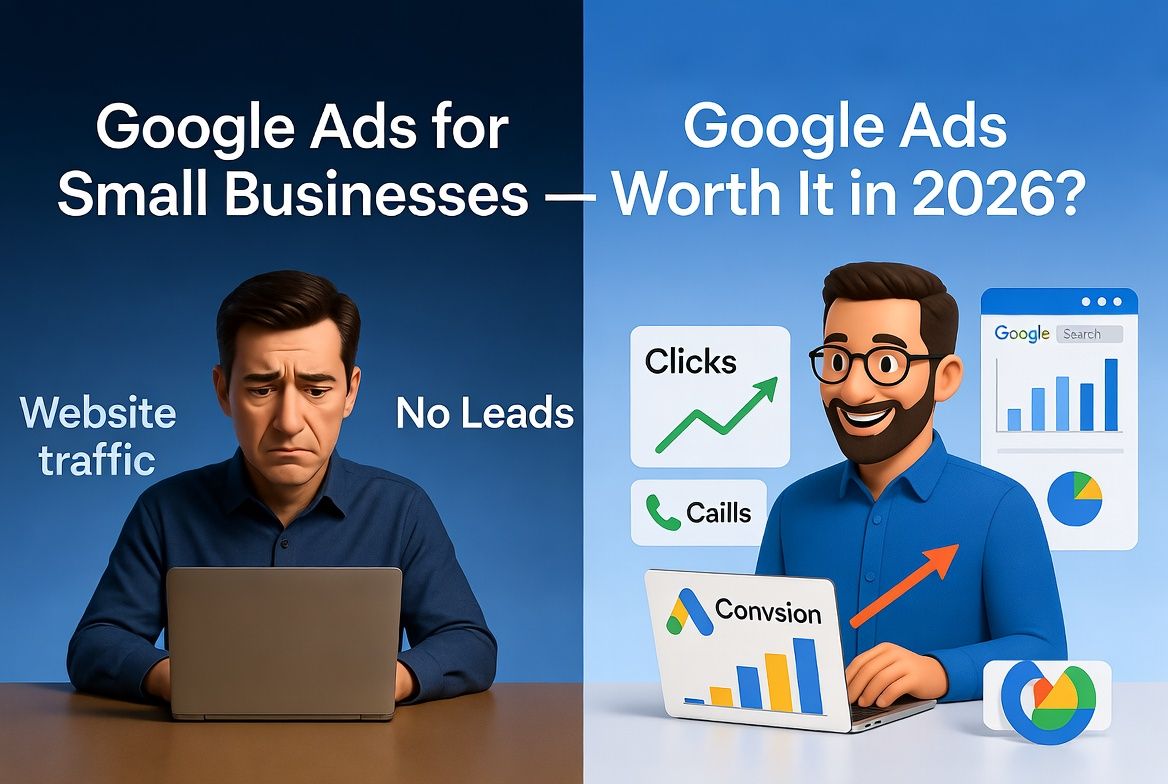
Your website gets traffic but few leads.
Your competitors rank for local searches while you do not.
Google Ads generate clicks but not enough qualified enquiries.
Your website has weak conversion paths.
Your social media gets engagement but little business value.
Your content gets impressions but does not generate commercial traffic.
Your business has multiple services but only one general page.
You want to expand into additional Dallas-area locations.
These are different problems and may require different solutions.
If your advertising brings customers to a website that does not convert, buying more traffic is not the solution. Fix the conversion problem first. Then scale the traffic source. That is how you turn paid traffic into a growth system instead of an expense.
This is why an agency should not immediately recommend more traffic without first understanding your website, offer, audience, tracking and conversion journey.
2. Check Whether the Agency Has a Real Strategy
One of the first questions to ask an online marketing agency in Dallas is:
“What is your strategy for my business?”
A strategy should go beyond:
We will publish blogs.
We will build backlinks.
We will run ads.
We will post on social media.
We will send a monthly report.
Those are activities.
The strategy should explain why those activities are being performed and how they work together.
Business goals
Target audience
Search demand
Competitor positioning
Keyword opportunities
Website structure
Conversion paths
Local search visibility
Paid advertising opportunities
Content opportunities
Social media
Analytics and tracking
Testing and optimization
This is especially important for businesses targeting competitive local markets.
3. Ask for Relevant Case Studies
A portfolio can show what an agency built.
A case study can show how it thinks.
When evaluating an agency, ask:
What was the client's problem?
What was changed?
Why were those changes made?
What strategy was used?
How long did it take?
What measurable outcomes were achieved?
What did the agency learn?
Can the agency explain the work beyond screenshots?
A roofing company serving the greater Austin area had one general service page and was not ranking effectively.
The strategy was changed by creating individual service pages for:
Roof repair
Roof replacement
Storm damage repair
Commercial roofing
Location pages were also created for:
Cedar Park
Round Rock
Pflugerville
Each page had unique content and its own keyword targeting instead of simply replacing the city name on a template.
According to the AheadTech360 case example, the site moved from having no first-page rankings to 14 first-page rankings within five months. The case study also notes that the suburban pages ranked faster because competition was lower, while those rankings contributed to broader domain authority that later supported the core Austin pages.
The important lesson is not simply the ranking number.
One service does not always need one generic page. One location does not always need recycled content. Search intent should influence the page structure.
4. Look at How the Agency Builds Keyword Architecture
This is one of the most important parts of SEO that businesses often overlook.
An agency should not simply give you a spreadsheet containing hundreds of keywords.
It should explain:
Which keyword belongs on which page — and why?
5. Check Whether They Create Unique Local Content
If you are targeting Dallas, simply adding “Dallas” to an existing page is not a local SEO strategy.
A useful Dallas page should demonstrate relevance to the market and the searcher's needs.
That can include:
Local search intent
Relevant services
Local business challenges
Industry-specific examples
Service-area information
Relevant FAQs
Unique supporting content
Internal links
Local proof where available
Clear conversion paths
Every important service gets its own page. Every actively served area can get its own location page. Each page should target a primary keyword, related semantic terms and a specific buyer intent rather than being a duplicated page with only the location name changed.
6. Don't Judge an SEO Agency Only by Rankings
Rankings matter.
But rankings alone do not pay the bills.
A Dallas business should also understand:
Organic traffic
Qualified organic traffic
Leads
Calls
Form submissions
Bookings
Sales
Conversion rate
Cost per acquisition
Revenue where tracking allows
Visibility for commercial keywords
For example, ranking #1 for a keyword that produces no customers may have less business value than ranking lower for a highly relevant commercial search.
A good agency should be able to explain the difference.
7. Check How They Handle Paid Advertising
If an agency offers Google Ads, Meta Ads or other paid campaigns, ask how it handles the complete conversion journey.
A paid campaign is not simply:
Keyword → Ad → Click
It is closer to:
Search Intent → Ad → Landing Page → User Experience → Conversion → Follow-up → Measurement
If the landing page is weak, increasing the advertising budget can simply increase wasted spend.
The problem is not always a lack of traffic. Sometimes the real problem is what happens after the click. That is why paid advertising should be considered alongside:
Landing-page experience
Messaging
Offer
CTA
Forms
Trust signals
Conversion tracking
Retargeting
CRO
8. Ask How They Measure Conversions
This question can separate reporting from actual performance management.
Ask:
“What exactly counts as a conversion for my business?”
Depending on the business, this could include:
Phone calls
Contact forms
Demo requests
Quote requests
Purchases
Bookings
Lead forms
Downloads
Qualified enquiries
An agency should also explain how those actions are tracked.
What happened?
Why did it happen?
What should we change?
What are we testing next?
A report that only lists impressions, clicks and rankings does not necessarily explain business performance.
9. Evaluate Their Content Strategy
If an agency offers content marketing, ask how topics are selected.
A strong content strategy should consider:
What are people actually searching for?
Are they researching, comparing, or ready to buy?
Does the topic connect to your products or services?
Can multiple useful pieces of content build depth around the subject?
Where should the reader go next?
For example, an informational article might answer a problem while naturally connecting the reader to a relevant service page.
That creates a path like:
Search → Useful Answer → Trust → Relevant Service → Conversion
10. Look for E-E-A-T Signals
For competitive search results, content should demonstrate more than keyword placement.
Your content should make it clear:
Who created it
Why they are qualified to discuss the topic
What experience supports the recommendations
Which examples are real
Which claims are supported
What the business actually does
For AheadTech360, this means using real campaign experience, actual case studies, practical processes and documented outcomes instead of filling articles with generic marketing advice.
Instead of saying:
“Local SEO is important for businesses.”
Show how a real project was structured.
Instead of saying:
“Create location pages.”
Explain why unique location pages were created, what each page targeted, and what happened afterward.
That is the difference between generic SEO content and experience-led content.
1. Make Sure the Content Is AI-Friendly Too
In 2026, businesses are not only competing for traditional search visibility.
Their information can also be surfaced through AI-powered search and answer systems.
That means content should be:
Clearly structured
Factually grounded
Easy to understand
Directly answerable
Consistent with the company's website
Supported by real experience
Organized with useful headings
Rich in specific details
Supported with FAQs where appropriate
For important service content, use a structure such as:
Direct answer → Explanation → Process → Real example → Data/evidence → Practical checklist → FAQs → CTA
This makes the information easier for both people and answer engines to understand.
13. Ask What Happens After the First 90 Days
Do not only ask:
“What will you do in month one?”
Ask:
“How will the strategy evolve after we have data?”
Digital marketing should not be completely static.
The first phase can reveal:
Which keywords attract qualified users
Which landing pages convert
Which ads generate stronger leads
Which content attracts commercial traffic
Which audiences respond
Where users drop off
Which pages need improvement
The next phase should use that information.
That creates a continuous process:
Launch → Measure → Learn → Improve → Scale
The 3 Common Reasons Digital Marketing Campaigns Struggle
A business does not necessarily need to attack the biggest keyword immediately.
A better strategy can involve:
High-intent opportunities → achievable terms → supporting content → authority → broader competitive terms
This can create a more sustainable search-growth path.
Getting visitors is only one part of acquisition.
If the page has:
Weak messaging
No clear CTA
Poor UX
No trust signals
Confusing navigation
Weak offer positioning
then more traffic may not solve the underlying problem.
Fix the conversion path before scaling acquisition.
This is particularly important for local SEO.
If you serve multiple areas, creating dozens of pages with the same content and changing only the city name can create weak pages with little unique value.
Instead:
Map → Research → Create unique intent → Build useful page → Connect internally → Measure → Improve
How AheadTech360 Approaches Digital Marketing
AheadTech360's approach is built around connecting different parts of the marketing system rather than treating every service as an isolated task.
That can include:
SEO
Local SEO
Google Ads
Paid social
Social media
Content
Email marketing
Website development
Ecommerce development
CRO
Creative services
UGC
Product photography
Video and motion content
The important part is how these channels work together.
For example:
SEO can bring organic demand.
Paid advertising can capture immediate commercial intent.
Content can answer questions and build topical authority.
Social and UGC can create additional creative and audience touchpoints.
CRO can improve what happens after visitors arrive.
Analytics can show what is actually producing business outcomes.