We helped 75+ brands generate $1.56M+ in revenue. Average ROI: 240% in Year 1
Let's be real with each other for a minute.
You've probably heard two very different things about SEO timelines.
On one side, you've got agencies promising "Page 1 results in 30 days!" On the other side, someone told you SEO takes forever and you'll be waiting two years before you see anything.
Neither of those is accurate.
The truth sits somewhere in the middle — and it's actually more encouraging than you might think.
This guide gives you the real SEO timeline. Phase by phase. No hype, no horror stories. Just an honest picture of what to expect when you invest in SEO for your small business.
The confusion around SEO timelines comes from one simple problem: people compare it to paid advertising.
With Google Ads or Meta Ads, you pay money, your ad goes live, and you can get traffic the same day. It's immediate. It's visible. It feels like it's working.
SEO doesn't work that way. And that's not a weakness — it's actually what makes it more valuable in the long run.
Paid ads are like renting a storefront. The moment you stop paying rent, you're gone. SEO is like buying property. It takes longer to close the deal, but once you own it, it works for you indefinitely.
The businesses that give up on SEO at month two are the same ones who stop watering a plant right before it's about to bloom.
The Real SEO Timeline — Phase by Phase
Here's what actually happens after you start investing in SEO for your small business:
Phase 1: Foundation
Phase 2: Traction
Phase 3: Compounding Growth
Not every business waits the same amount of time. These factors can accelerate your timeline:
Low competition in your niche or location. A plumber in a small town will rank faster than one in a major city. Less competition means faster results.
A technically clean website. Sites with fast load times, mobile optimization, and no broken links give Google's crawlers an easier job — which speeds up indexing and ranking.
Consistent content publishing. Businesses that publish one high-quality blog post per week build authority faster than those that post once a month or less.
Strong review generation. For local SEO especially, a steady stream of new Google reviews is a powerful trust signal that accelerates local rankings.
Targeting the right keywords from day one. Going after realistic, low-competition keywords instead of trying to rank for impossible terms gets you results faster and builds momentum.
On the flip side, these are the most common things that delay results — and most of them are avoidable:
A brand new domain with no history or authority — Google takes time to trust new websites
Targeting highly competitive keywords too early
Inconsistent content — publishing in bursts then going quiet for weeks
Technical issues that prevent Google from crawling your pages properly
No backlinks — external sites linking to you is a key trust signal
Poor user experience — slow load times, confusing navigation, bad mobile design
This section could save you a lot of money.
If an SEO agency or freelancer ever tells you any of the following — be very cautious:
"We guarantee Page 1 rankings in 30 days." — No legitimate SEO professional makes this guarantee. Google's algorithm is not something anyone controls.
"We have a special relationship with Google." — No one does. Google does not have partner arrangements that influence organic search rankings.
"Our secret method gets fast results." — Fast results in SEO usually mean black-hat tactics — things like buying backlinks or keyword stuffing. These work briefly, then Google penalizes your site. Recovery can take months or years.
"You'll see results in the first week." — The only results you can see in week one are technical fixes being implemented. Actual ranking movement takes time.
Real SEO is transparent. A trustworthy agency tells you exactly what they're doing, why they're doing it, and what results are realistic based on your specific situation.
How to Track Your SEO Progress While You Wait
Patience is easier when you can see things moving in the right direction. Here's how to track real SEO progress month by month:
Google Search Console — Impressions. Even before clicks come in, impressions start rising. This tells you Google is starting to show your site in results. It's the earliest positive signal.
Keyword ranking tracking. Use a free tool like Google Search Console's Queries tab or Ubersuggest to monitor where your target keywords are ranking each month. Small movements from position 40 to position 18 are meaningful progress.
Organic traffic in Google Analytics. Track the number of visitors coming from organic search each month. Even small consistent increases are a sign the strategy is working.
Google Business Profile insights. Check how many people are viewing your profile, clicking your website, and requesting directions each month. Local SEO impact shows up here first.
Inbound leads. Ultimately, this is what matters. Track where your leads are coming from. When you start getting calls or form submissions from people who found you on Google — that's SEO working.
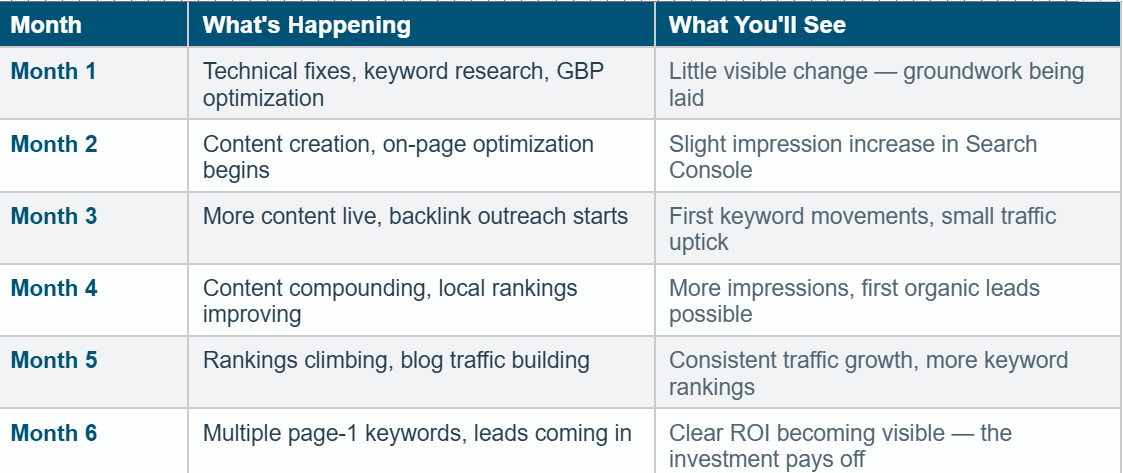
Here's what a realistic first 6 months of SEO looks like for a typical small business starting from zero:
Plant the seed today. The tree grows whether you're watching it or not.